
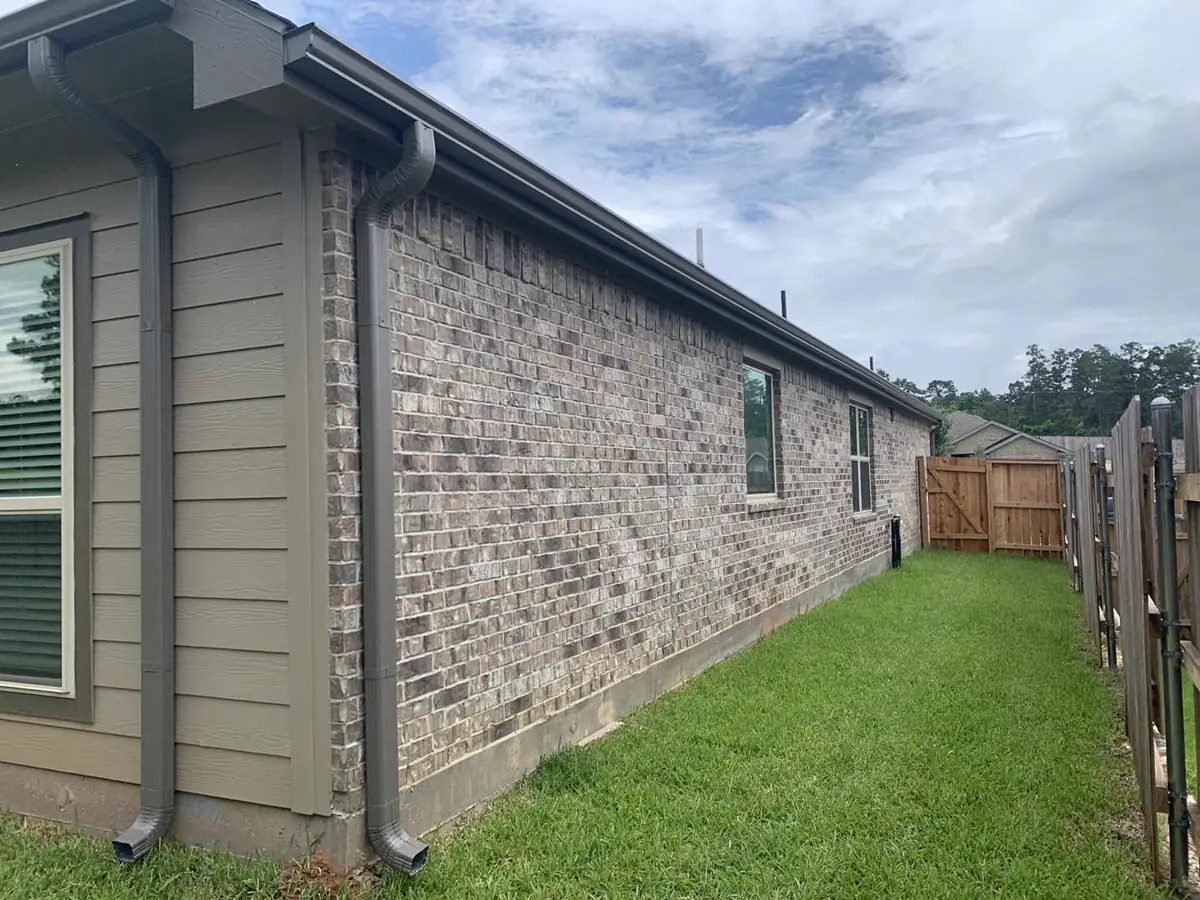
Not every roof edge automatically needs gutter, and not every water problem is solved by covering the entire house. The right answer comes from watching where the roof concentrates water and what the ground does with it after it lands.
“Go outside while it's raining and watch the house. The roof and the ground will show you what needs attention.”
Mac's homeowner test
Start with the places water can cause damage or disruption
Gutter is most useful where roof runoff erodes soil, washes out beds, splashes siding or doors, falls across a walkway, collects beside the foundation, or pours from a valley onto a concentrated area. Those observations create a stronger plan than assuming every edge has the same risk.
- Doors, porches, and frequently used walkways
- Flower beds, bare soil, and visible erosion
- Low areas beside the foundation
- Roof valleys and large drainage areas
- Patios, driveways, and places where splash becomes a nuisance
When full-perimeter gutter may make sense
A complete system can be sensible when several sides show the same risk, the roof sends water toward vulnerable areas around the house, or a consistent finished appearance is important. Full coverage still needs enough outlets and responsible downspout endpoints; more gutter without a discharge plan is not automatically better.
When selected runs may be enough
Some homes have roof sections that drain harmlessly onto well-sloped open ground and other sections that pour over an entry or flower bed. Properly planned partial runs can target the problem while avoiding unnecessary material. The runs must still have enough slope, outlets, and downspouts to work independently.
What gutters cannot solve
If the ground slopes toward the house, the lot is the low point, an underground drain is blocked, or soil remains saturated, a gutter may only move the problem from the roof edge to the downspout endpoint. Grading, drainage, landscaping, or foundation expertise may be needed beyond Mac's house-side scope.
A simple rain-day checklist
During a real rain, safely observe from the ground. Note where water overshoots the roof edge, where valleys concentrate flow, where it splashes, and whether the soil carries it away. Photos or a short video can help Mac understand an intermittent problem when the estimate happens on a dry day.
Turn the observations into a layout
Mac combines the homeowner's goal with roof measurements, valleys, long runs, available downspout locations, landscaping, and ground slope. The recommendation might be selected runs, a full system, downspout changes, cleaning and inspection, repair, or a referral for work the gutter system cannot do.
Whole-house gutter questions
Is it bad to have gutters on only part of a house?
No, if the selected runs address the real runoff risks and have proper outlets and endpoints. Partial gutter becomes a problem when it simply moves overflow to another vulnerable area.
Which sides usually need gutters most?
Prioritize roof edges above doors, walks, flower beds, erosion, splashback, low foundation areas, and large or valley-fed runoff sections. The compass direction by itself does not decide it.
Will gutters fix water pooling beside my foundation?
They can help when roof runoff is the source and the downspout can reach ground that carries water away. They cannot correct negative grading, a low lot, or a failed underground system.
Can I determine this when it is not raining?
A dry inspection shows roof geometry and staining, but real rain reveals concentration and ground behavior. Photos or video from a storm are useful evidence for the estimate.
Do partial gutters look unfinished?
They do not have to. Mac considers termination points, color, profile, slope, and downspout placement so a targeted system still looks intentional.