
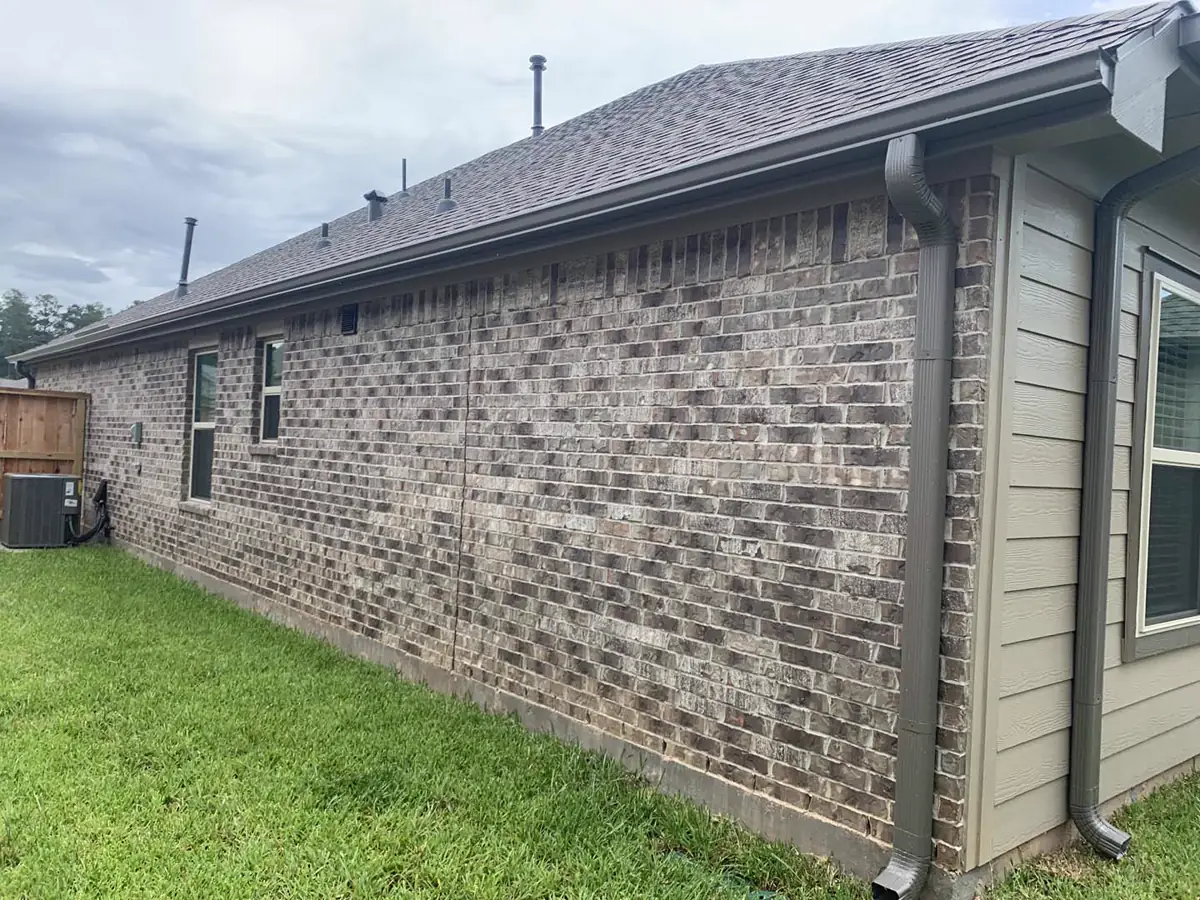
Gutter System Failures and Prevention Practices
Download PDFGutter System Failures - Common Causes
Identifying the causes of system failure and potential prevention methods
Residential gutter systems fail for a limited number of recurring reasons. Some failures are unavoidable and driven by environmental forces, while others result from material limitations, installation practices, or structural issues with the building itself. Understanding these failure modes allows contractors and homeowners to make better decisions regarding system design, installation standards, and maintenance.Weather-Related Damage
Weather-related damage is one of the most common causes of gutter system replacement. These failures are generally not related to material quality or installation practices, but instead result from extreme environmental conditions.Hail and Wind-Blown Debris
Hail and wind-blown debris account for a large number of gutter replacements across Oklahoma, Texas, Arkansas, and the Gulf Coast region. Unfortunately, there are very few practical prevention opportunities. Even extremely durable roofing materials such as steel roofs frequently sustain damage during major hail events. Because of this, gutter systems-typically made from .027 or .032 aluminum- cannot realistically be engineered to fully resist these impacts.Tree Limb Damage
Overhanging or weakened trees near rooflines are another frequent cause of weather-related gutter damage.Common scenarios include:
- limbs breaking during storms
- branches repeatedly striking gutters during high winds
- large limbs falling directly onto the system
Ice and Snow Damage
Winter precipitation can be extremely destructive to gutter systems. Unlike hail or wind damage, snow and ice failures can often be prevented or mitigated through proper installation practices and material selection. Although snow is lighter than water (roughly a 10:1 ratio), it introduces several structural challenges.Snow Accumulation
Snow does not flow through gutters the way rainwater does. Instead, it accumulates and remains stationary, placing a constant load on the system.Snow Adhesion
Snow tends to stick together and adhere to surfaces, meaning a portion of the snow load located higher on the roof can transfer weight toward the gutter system.Ice Formation
The most destructive stage of winter precipitation occurs when snow melts and refreezes. When water freezes into ice it expands approximately 9-10% by volume. This expansion places outward pressure on the gutter system and often causes failures such as:- stretching or breaking the hook portion of hidden hangers
- tearing sealant at corner seams or end caps
- deforming the gutter trough
- rip the gutter face from its hangers
- tear the entire system away from the fascia
Preventative Measures
Despite the destructive nature of snow and ice, several installation practices can significantly reduce the risk of failure.Leaf Guard Systems
Certain leaf protection systems can help reduce snow and ice accumulation inside gutters.The most effective systems are:
- Structural - attached to both the front lip and rear of the gutter
- Fine-mesh designs - such as stainless steel mesh or punched aluminum systems that prevent snow from entering the gutter trough
Reduced Hanger Spacing
In heavy-snow regions, hanger spacing may be reduced to 12 inches rather than the typical 24 inches used in temperate regions. The additional hangers distribute load more evenly and increase system strength.Longer Structural Fasteners
Standard gutter installations typically use 1.5-2 inch #10 screws, which penetrate the fascia board but may not extend deeply into structural framing. In snowy regions, longer fasteners that penetrate into the sub-fascia or rafter tails provide greater resistance to pull-out forces.Snow Guards and Snow Rails
Metal roof systems often benefit from additional snow-retention hardware.These include:
- Snow guards - individual brackets installed across the roof surface
- Snow rails - horizontal bars designed to hold large masses of snow in place
Age and Exposure Damage
Age-related deterioration is responsible for a large portion of legitimate gutter system failures. Some of these issues are unavoidable material limitations, while others are influenced by design or installation choices.Expected Lifespan of Seamless Gutters
Most aluminum seamless gutter systems have a functional lifespan of approximately 15-20 years under typical conditions. In high-heat regions this lifespan may be closer to 15 years due to accelerated material fatigue and sealant degradation. Even copper gutter systems-despite copper's long material life-rarely operate more than 30 years without periodic, often significant repairs.Material Limitations
Thermal Expansion
All metals expand and contract with temperature changes. This movement occurs even in regions that rarely experience dramatic thermal expansion. Over time, seasonal movement gradually fatigues the metal, producing:- wavy gutter lines
- joint separation
- metal cracking or tearing
Sealant Degradation
Common seam sealants used in the gutter industry include:- Geocel 2320
- Ruscoe PSCG
- MasterSeal NP-1
- flexibility
- hardness
- UV stability
- ease of application
- user safety
Structural Movement
Buildings naturally move over time due to:- soil settlement
- seasonal expansion and contraction
- minor structural shifting
Sun Bleaching
Most seamless gutters are manufactured using factory-applied painted finishes. While these coatings are durable, constant sun exposure eventually causes fading or chalking. Some colors may show noticeable degradation within 10-15 years. Touch-up paints are commonly used for small repairs, but aerosol paints often deteriorate more quickly-sometimes within 2-3 years in direct sunlight.Installation and Material Choices That Accelerate Failure
Many premature gutter failures originate from cost-saving decisions made during new construction. Builder-installed systems often include:- undersized gutters
- thinner aluminum coil
- wider downspout spacing
- X-cut downspout openings instead of proper outlets
- excessive use of aerosol touch-up paint
Undersized Gutters
Undersized systems frequently operate near maximum capacity during heavy rainfall. Repeated overflow allows abrasive roof-grit debris to wash down the exterior of the gutter, accelerating paint wear.Thin Material
Thinner aluminum shows the effects of thermal expansion and deformation much sooner than thicker coil.Low-Quality Hangers
Lightweight hanger brackets fail under lower loads and provide less structural rigidity.Excessive Downspout Spacing
Long distances between downspouts create localized areas of water accumulation that place continuous stress on hidden hangers.X-Cut Downspout Openings
Cutting an "X" in the gutter rather than installing a mechanical outlet introduces tear points that propagate to the face of the gutter during natural thermal expansion.Excessive Touch-Up Paint
Using aerosol paint on endcaps, miters and elbows instead of properly matched factory components results in premature finish failure on corners and fittings.Preventative Design Practices
Many of the failures described above can be reduced or moderated through straightforward installation standards. Recommended practices include:- sizing gutters appropriately for roof area and rainfall intensity
- selecting coil thickness appropriate for the region
- using hangers 0.060 inches thick or greater with reinforced edges
- spacing downspouts according to expected water volume
- installing mechanically punched outlets instead of X-cuts
- limiting aerosol paint use to small repairs only
Substrate Failure
A final failure mode occurs when a gutter system detaches from the house while still firmly attached to the fascia board. This indicates that the supporting substrate itself has failed. Although this is not strictly an installation error, installers can reduce the risk by recognizing unsuitable mounting surfaces.Common Causes
Substrate failures often occur when gutters are attached to decorative trim boards rather than structural framing members.Examples include:
- crown molding
- decorative drip mold
- thin trim boards attached with brads or staples
Preventative Practices
To reduce substrate failure risk:- avoid mounting gutters directly to decorative trim
- ensure fascia boards are secure and structurally sound before installation
- use fasteners long enough to reach structural framing when trim boards are present, and in situations where the fascia material isn't directly visible, i.e., behind vinyl or aluminum siding.
- install appropriate wedges or gutter supports when mounting to angled or stepped fascia surfaces
- T-wedges
- gutter bumpers
- wedge blocks
- full-length e-wedges
Version
V.1.0 03.11.26
(v.1.1 04.12.26 - addition of dcGutterPRO as Reviewer)
Authors
Seth ForrestierKilgore, TX
The Gutter Guy
www.TheGutterGuy.com
Reviewers
MacDaniel DeverConroe, Tx
dcGutterPRO
www.dcgutterpro.com
Professional Resources:
Peer Reviewed Technical White Papers
Gutter Coil Thickness Standards in Residential Installation v.1.1. PDF Gutter and Downspout Sizing Principles in Residential Applications v.1.1. PDF Residential Seamless Gutter Installation Standards v.1.1. PDF Gutter System Failures and Prevention Practices v.1.1. PDFMacDaniel Dever, Owner: 832-525-8795
Hours and service area
Business hours
Monday–Friday, 8:00 AM–7:00 PM; Saturday–Sunday closed
Call, text, or email during business hours for a free property-specific estimate.
Where dcGutterPRO works
dcGutterPRO comes to the property for estimates and installations; customers do not need to visit an office.
- Conroe
- Willis
- Montgomery
- Shenandoah
- Grangerland
- Cut and Shoot
- The Woodlands
- Porter Heights
- Cypress
- Panorama Village
- Montgomery County
- Chateau Woods
- Lexington Heights
- Sterling Ridge, The Woodlands